

Hand Smocking in Modern Kidswear: Is It Worth It for Your Brand?
If you've been in the children's clothing business for any length of time, you've noticed that smocking never really goes away. Trends come and go, but hand-smocked dresses keep showing up in the bestseller lists of boutiques from New Orleans to London to Sydney.
And yet, if you're a brand that doesn't currently offer smocked pieces, the idea of adding them can feel daunting. Hand smocking sounds expensive. It sounds slow. It sounds like a niche product for a niche customer. Is it actually worth it?
We've been manufacturing hand-smocked children's clothing for over 30 years. We've seen brands add smocking and watch it become their top seller. We've also seen brands approach it the wrong way and struggle to make it work. Here's what we've learned about making hand smocking commercially viable in a modern kidswear collection.
%20(1500%20x%20800%20px)%20(4)_edited_edited.jpg)
Smocking sells because parents buy emotionally
Children's clothing sits at an interesting intersection. Parents are making a practical purchase (the child needs clothes) but the buying decision is often emotional. A hand-smocked dress isn't bought because the child needs a dress. It's bought because the parent sees it and feels something: nostalgia, beauty, the desire to give their child something special to put in their forever box.
This is why smocked pieces consistently command higher price points than plain garments in the same fabric. The customer isn't comparing it to a basic cotton dress. They're comparing it to a keepsake, a photo opportunity, a gift. That emotional value translates directly into willingness to pay more.
For boutique brands, this is significant. Smocked pieces often have the highest margin in the collection, not despite their higher production cost, but because the perceived value to the customer outpaces the cost increase.

Different markets want different smocking
One of the mistakes brands make is treating "smocking" as a single category. It's not. Different markets have distinct preferences, and understanding these differences is important if you want your smocked pieces to sell.
US market: Picture smocking dominates. American boutique customers love seasonal themes: pumpkins and turkeys for Thanksgiving, Santa and Christmas trees for the holidays, bunnies for Easter, patriotic themes for Fourth of July. Bishop dresses and bubbles are popular silhouettes. Personalised name smocking is also a strong seller in the US, particularly for gifts and special occasions.
UK market: Geometric smocking in the classic English style is the preference. Think Peter Pan collars, gathered sleeves, can-can lined skirts. The aesthetic is more traditional and understated compared to the US. Spanish-influenced smocking is also popular in the UK, with brands drawing on European heritage styling.
Australian market: A mix of both, leaning more toward the UK aesthetic of geometric smocking.
If you're selling primarily to one market, design your smocked collection accordingly. If you're selling across markets, consider offering both geometric and picture smocking to cover both preferences.

Hand smocking vs machine smocking: which makes sense for your brand?
%20(1500%20x%20800%20px)%20(3)_edited.jpg)
We've covered this in detail on our smocked heirloom page, but it's worth addressing here from a commercial angle.
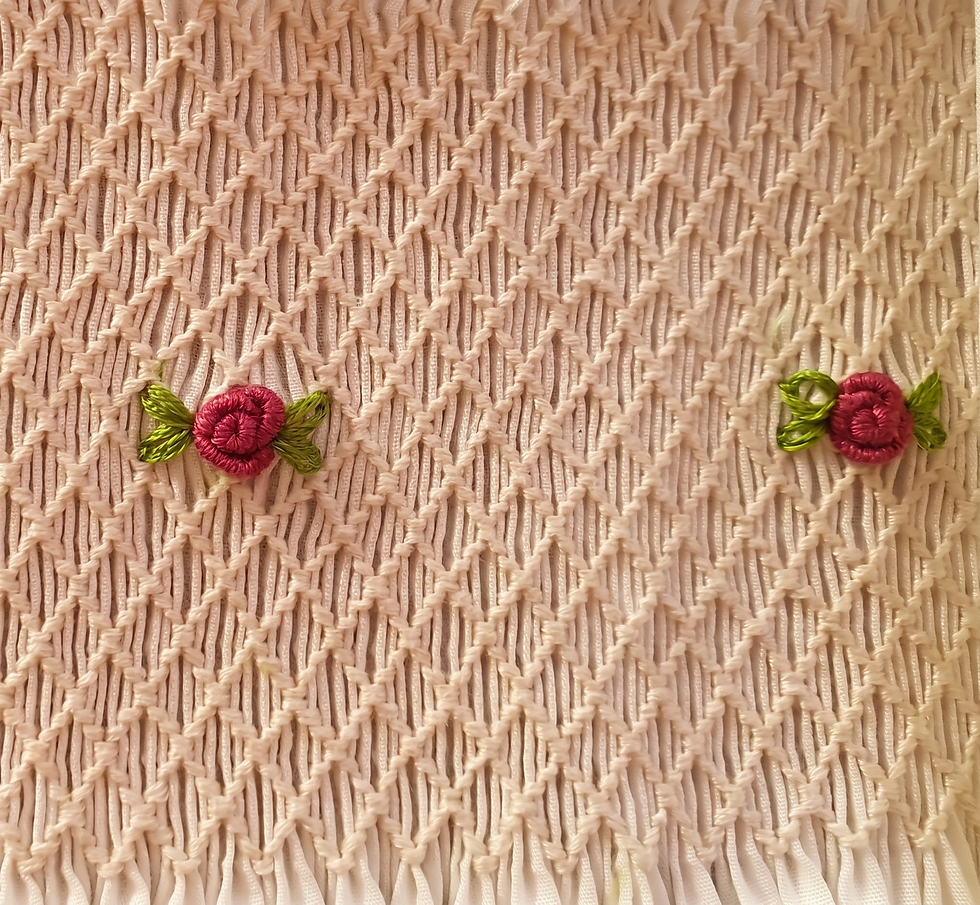
Hand smocking costs more per piece because every stitch is done by hand. The texture and depth of hand smocking is visibly and physically different from machine smocking. For premium boutiques and heirloom-focused brands, hand smocking is what your customers expect and what justifies your price point.
Machine smocking is faster and more cost-effective. The result is cleaner and more uniform but lacks the organic character of handwork. For brands operating at a lower price point or producing larger volumes where consistency at speed matters more than artisanal character, machine smocking can make commercial sense.
Many of our clients use both. They'll offer a premium hand-smocked line alongside a more accessible machine-smocked range. This lets them serve different price points within the same brand without diluting the perceived quality of their top-tier pieces. The question isn't which is "better." It's which serves your brand positioning and your customer's expectations.
What does hand smocking actually cost?
This is the question everyone wants answered, and the answer is: it depends. But here's how to think about it.
The cost of a hand-smocked garment is driven by three main factors:
-
The complexity of the smocking design (a simple geometric cable pattern takes less time than an elaborate picture smock with multiple colours)
-
The size of the smocked panel (a small chest panel costs less than a fully smocked bodice), and
-
The additional handwork involved (embroidery, French knots, bullion roses on top of the smocking adds time and cost).
As a rough guide, the hand smocking and embroidery component alone can add 20-25% to the base garment cost. This is on top of the fabric, construction, and finishing costs that any garment carries.
The key commercial question isn't "how much does smocking add to my production cost?" It's "how much does smocking add to my retail price?" Our clients typically retail hand-smocked pieces at 2-3x their production cost.
How to introduce smocking into your collection if you haven't done it before
One of the mistakes brands make is treating "smocking" as a single category. It's not. Different markets have distinct preferences, and understanding these differences is important if you want your smocked pieces to sell.

Start small
You don't need to launch a full smocked collection. Start with two or three styles: one classic geometric dress, one picture smock in a seasonal theme, and perhaps one simpler piece with just a small smocked panel or embroidered detail. This lets you test customer response without a large upfront commitment. Look at what's already selling in your market and enter with something that has proven demand.
Price with confidence.
New brands sometimes underprice smocked pieces because they're nervous about the higher retail price. Don't do this. Your customers know that handwork costs more. If you've invested in genuine hand smocking, price it accordingly. Underpricing signals that either the quality isn't real or you don't believe in the product.
Use smocking as your hero product.
Even if smocked pieces are a small part of your collection, they can anchor your brand story. They're the pieces that are worn for special occasions, which photograph well, and which get shared on social media.
Order samples first.
Before committing to production, get samples made and put them in front of your customers (or photograph them for your website and social media). The response will tell you whether to move forward and at what scale.
How to introduce smocking into your collection if you haven't done it before
One of the mistakes brands make is treating "smocking" as a single category. It's not. Different markets have distinct preferences, and understanding these differences is important if you want your smocked pieces to sell.
Start small
You don't need to launch a full smocked collection. Start with two or three styles: one classic geometric dress, one picture smock in a seasonal theme, and perhaps one simpler piece with just a small smocked panel or embroidered detail. This lets you test customer response without a large upfront commitment. Look at what's already selling in your market and enter with something that has proven demand.
Price with confidence.
New brands sometimes underprice smocked pieces because they're nervous about the higher retail price. Don't do this. Your customers know that handwork costs more. If you've invested in genuine hand smocking, price it accordingly. Underpricing signals that either the quality isn't real or you don't believe in the product.
Use smocking as your hero product.
Even if smocked pieces are a small part of your collection, they can anchor your brand story. They're the pieces that are worn for special occasions, which photograph well, and which get shared on social media.
Order samples first.
Before committing to production, get samples made and put them in front of your customers (or photograph them for your website and social media). The response will tell you whether to move forward and at what scale.


Different markets want different smocking
There's one more dimension to hand smocking that matters commercially: the story behind it.
Today's consumers, especially in the premium and boutique space, care about provenance. They want to know who made their clothes and how. Hand smocking gives you a genuine artisan story to tell.
At Strawberry Stripes, our smocking and embroidery is done by a team of over 50 women artisans. Each one has been trained in traditional hand techniques. They work with flexible schedules and receive benefits including healthcare and financial planning assistance. When your customer buys a hand-smocked dress from your brand, there's a real person and a real story behind every stitch.
So, is it worth it?
If your brand serves the premium or boutique end of the children's clothing market, and your customers value quality, craft, and exclusivity: yes. Hand smocking is one of the most commercially defensible niches in kidswear. It's hard to replicate cheaply, it commands premium pricing, and it creates emotional connection with customers in a way that knitted fabrics struggle to match.
The key is approaching it strategically: understanding your market's preferences, starting with the right styles, pricing with confidence, and working with a manufacturer who specialises in the craft.